Persian Gulf Delays Turn Idle Vessels into a Biofouling and Compliance Threat
Extended vessel immobilisation in the Persian Gulf is becoming more than a scheduling problem: it is creating a fast-rising hull fouling, efficiency and biosecurity exposure. For owners and technical managers, the issue now reaches into emissions compliance, charter economics and drydock planning.
What happened
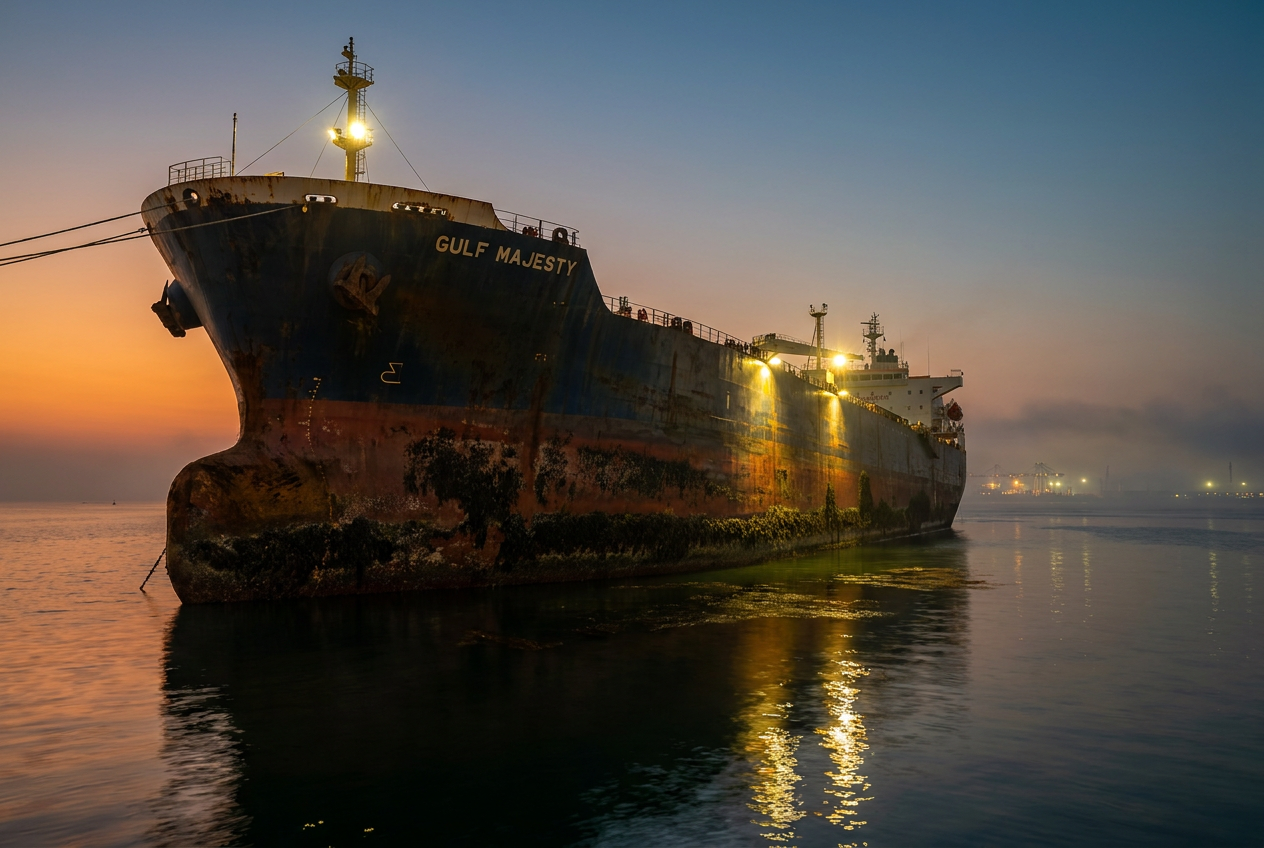
Shipping data cited by Drydock Magazine indicates that by mid-June 2026, nearly a thousand vessels were unable to trade normally in the Persian Gulf, with well over half stuck for more than three months. In that environment, hull contamination can build quickly, especially where ships remain stationary in warm, saline and biologically active waters. This matters because fouling degrades hydrodynamic performance and can also trigger biosecurity scrutiny in ports such as Australia, New Zealand, California and Brazil, all of which now apply increasingly specific hull cleanliness and management requirements.
What it means for owners
For shipowners and operators, the immediate mistake would be to treat Gulf delay time as commercially lost days only. The larger cost may emerge later, when a vessel re-enters service with a hull and niche areas that are no longer in an acceptable condition. Even a relatively early-stage fouling layer can increase resistance enough to distort baseline fuel curves, which in turn affects voyage economics, speed-consumption performance and reported carbon intensity. That has direct implications for CII management. A ship that returns to trading after months at anchor may show degraded efficiency for several reporting periods unless cleaning or coating remediation is carried out promptly. In parallel, higher fuel burn raises exposure under EU ETS where applicable, and can complicate FuelEU Maritime compliance trajectories by worsening the vessel’s energy profile. In other words, a delay outside Europe can still create cost consequences once the ship resumes employment on Europe-linked trades.
There is also a charter-party and off-hire dimension. Owners may face disputes over whether post-delay underperformance is attributable to extraordinary geopolitical disruption, deferred maintenance, or preventable hull condition deterioration. Charterers are unlikely to absorb the cost of a vessel that is materially slower or more fuel-hungry than warranted. That pushes technical and commercial teams toward earlier intervention, yet intervention is not straightforward. In-water cleaning options depend on local permission, waste capture capability, coating compatibility and upcoming port-state biosecurity expectations. If cleaning is postponed to drydock, the industry then runs into another bottleneck: limited yard windows, diver availability, class survey timing and the practical sequencing of steel work, coating repair and underwater inspections. A vessel stranded long enough may not just need a quick hull polish; it may require a broader reassessment of coating condition, sea chest management, propeller polishing, anode status and niche-area inspection before class or regulators are satisfied.
The strategic question is whether to advance docking, rely on interim underwater services, or trade on and accept efficiency penalties. That decision should be made vessel by vessel. Age of coating, next special survey, trading route, charter commitments, expected idle duration and destination-country biosecurity rules all matter. For some ships, bringing forward drydocking may be the least expensive option once fuel penalties, emissions costs and potential port delays are quantified together. For others, a controlled in-water intervention paired with an updated biofouling management record may preserve schedule integrity until a planned yard slot. The core point is that biofouling is no longer a secondary technical housekeeping issue in this scenario; it is now intersecting with carbon compliance, revenue assurance and maintenance planning in a way that requires board-level attention.
MaritimeNG — critical view
The industry should be careful not to overgeneralise from a vessel count and a known high-risk environment to a uniform technical outcome across the entire fleet. Time at anchor is important, but fouling severity will still vary according to coating age, hull treatment history, location within the Gulf, operational movement, draft profile and niche-area design. Some ships may experience manageable slime accumulation; others may develop more serious macrofouling. Without vessel-specific inspection data, there is a risk of turning a valid warning into a blanket assumption.
There is also a policy tension worth watching. Regulators increasingly demand cleaner hulls to prevent invasive species transfer, yet local restrictions on in-water cleaning and debris discharge can leave operators with few realistic compliance pathways when disruption is prolonged and unplanned. If geopolitical instability persists, authorities may need to clarify how they will treat vessels emerging from conflict-adjacent delay zones. The market should also monitor whether yard congestion, underwater service shortages and inconsistent enforcement produce uneven commercial outcomes between better-prepared fleets and those with weaker maintenance data discipline.
Verdict
The Gulf disruption is evolving into a downstream technical and compliance problem that will outlast the anchorage period itself. Owners that quantify fouling risk early, align class and docking decisions quickly, and document biofouling status rigorously will be better placed to control cost and avoid secondary delays; this is precisely the kind of planning challenge where structured yard and compliance visibility becomes valuable.
Fundamental basis
The economic mechanics behind the facts above, grounded in Martin Stopford’s Maritime Economics. Reference only — not investment advice.
Facing a similar situation on your vessel? Model the numbers before you commit.
Open the off-hire & deviation calculatorsSource Attribution
This analytical review is based on publicly available facts originally reported by Drydock Magazine. MaritimeNG does not claim authorship of the underlying facts. Read the original publication
© 2026 MaritimeNG — Independent analytical commentary. All analysis, opinions, and forward-looking assessments are original work by MaritimeNG Editorial and may differ from those of the parties mentioned or the cited source. Factual data is restated in our own words based on publicly available information. All trademarks and trade names belong to their respective owners. This content does not constitute legal, technical, or investment advice.