Oceania’s Fleet Reset Deepens the Market for Midlife Cruise Refits
NCLH’s latest Oceania vessel transfer is more than a portfolio tidy-up: it highlights a widening split between luxury fleet upscaling and the secondary market for proven small cruise tonnage. For yards and marine contractors, the handover points to sustained demand for conversion, hotel upgrades, and service-specific refit work in Europe.
What happened
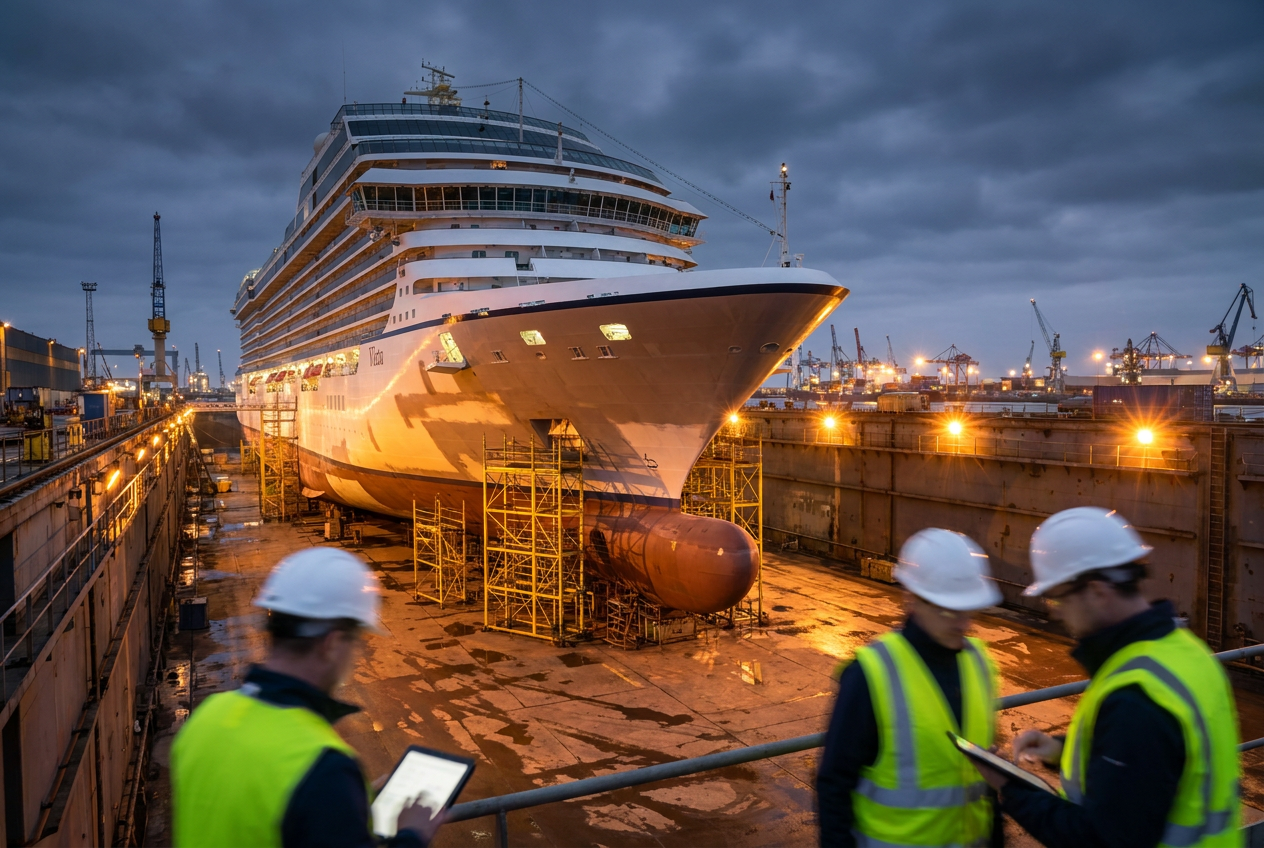
Norwegian Cruise Line Holdings will remove Insignia from the Oceania Cruises fleet in September 2027, with the ship moving to Germany-based Phoenix Reisen and entering service there in November 2027 under the name Alvara. The vessel was built in 1998, measures 30,277 gross tons, and carries about 680 guests; its departure requires Oceania to cancel eight scheduled sailings. Before starting with Phoenix, the ship is set for drydocking in Bremerhaven for repainting and modifications tied to its new brand and operating profile. The transfer follows other changes involving Oceania’s original R-class ships, while the company begins introducing the larger 86,000-gt Oceania Sonata in August 2027 and has four additional sister ships on order through 2037.
What it means for owners
The commercial signal here is not simply that one cruise ship has found a new operator; it is that older premium tonnage still holds value when redeployed into a different product niche. NCLH is effectively narrowing Oceania’s hardware base toward larger, more revenue-dense vessels with stronger suite mix, broader onboard spend potential, and a physical platform better aligned with upper-premium and luxury pricing. That suggests a continued retreat from the small-ship middle ground unless those vessels can be materially repositioned. For owners elsewhere in the sector, the lesson is clear: ships built in the late 1990s and early 2000s remain tradable assets, but only where buyer and seller have sharply different earnings models. A vessel that no longer fits one brand’s yield architecture may still work for an operator prioritizing itinerary intimacy, repeat guests, and lower acquisition cost over headline newbuild economics.
For EPC firms, repair yards, and marine interiors specialists, this type of transaction is structurally important. A transfer between cruise brands rarely stops at livery changes; it usually triggers cabin refreshes, public-space adaptation, technical surveys, class and flag compliance work, digital system integration, and hotel-service reconfiguration. Even a modest brand conversion can generate a sizable package of engineering and outfitting scope, particularly when the receiving operator wants product continuity across an existing fleet. European yards are well placed to capture this work because the region combines cruise-experienced labor, dense supplier networks, and proximity to both Mediterranean and Northern European deployment. The broader implication is that cruise modernization demand is becoming bifurcated: at the top end, owners are commissioning larger and more luxurious ships; beneath that, a secondary stream of older vessels is sustaining a renovation market that is less glamorous than newbuilds but often faster-moving and operationally essential.
MaritimeNG — critical view
One underexamined issue is whether the industry is underestimating execution risk in the handoff of aging cruise assets. Small legacy ships can be attractive purchases because capital entry cost is lower than ordering a new vessel, but the real economics depend on lifecycle spending after delivery. Steel renewal, HVAC modernization, wastewater systems, hotel power loads, and evolving fire-safety or environmental compliance can quickly turn a straightforward transfer into a deeper capex story. If yard slots tighten in 2027-2028, buyers of older tonnage could face schedule pressure, cost inflation, or compromises in scope. That matters for operators trying to launch a ship under a new identity on a fixed commercial date.
There is also a strategic question for the wider cruise market: as large groups retire smaller legacy platforms, independent and mid-sized operators may gain access to vessels that let them expand without assuming newbuild risk. That can sharpen competition in destination-led cruising, especially in Northern Europe, the Mediterranean, and expedition-adjacent cultural itineraries where port access and intimacy matter more than scale. At the same time, the supply of suitable secondhand ships is finite. Once this pool is absorbed, the sector may face a gap between guest demand for smaller-ship experiences and the limited pipeline of purpose-built replacements. That mismatch could ultimately support stronger rates for quality refit yards and specialist technical managers able to extend the useful life of aging cruise units safely and efficiently.
Verdict
This transfer confirms that cruise fleet renewal is producing two parallel markets: one for larger luxury newbuilds and another for intensive midlife adaptation of older ships. Owners, yards, and project managers that read both tracks early will be best placed to capture value as the next wave of disposals and refits moves through Europe.
Fundamental basis
The economic mechanics behind the facts above, grounded in Martin Stopford’s Maritime Economics. Reference only — not investment advice.
Facing a similar situation on your vessel? Model the numbers before you commit.
Open the off-hire & deviation calculatorsSource Attribution
This analytical review is based on publicly available facts originally reported by The Maritime Executive. MaritimeNG does not claim authorship of the underlying facts. Read the original publication
© 2026 MaritimeNG — Independent analytical commentary. All analysis, opinions, and forward-looking assessments are original work by MaritimeNG Editorial and may differ from those of the parties mentioned or the cited source. Factual data is restated in our own words based on publicly available information. All trademarks and trade names belong to their respective owners. This content does not constitute legal, technical, or investment advice.