Lowering Air Draft as a Life-Extension Strategy for Midlife Cruise Tonnage
Carnival’s latest modification to Carnival Freedom is more than a design revision: it shows how targeted structural work can widen deployment options for aging cruise assets. From a MaritimeNG perspective, this is a notable example of retrofit engineering being used to improve commercial flexibility rather than simply refresh hotel spaces.
What happened
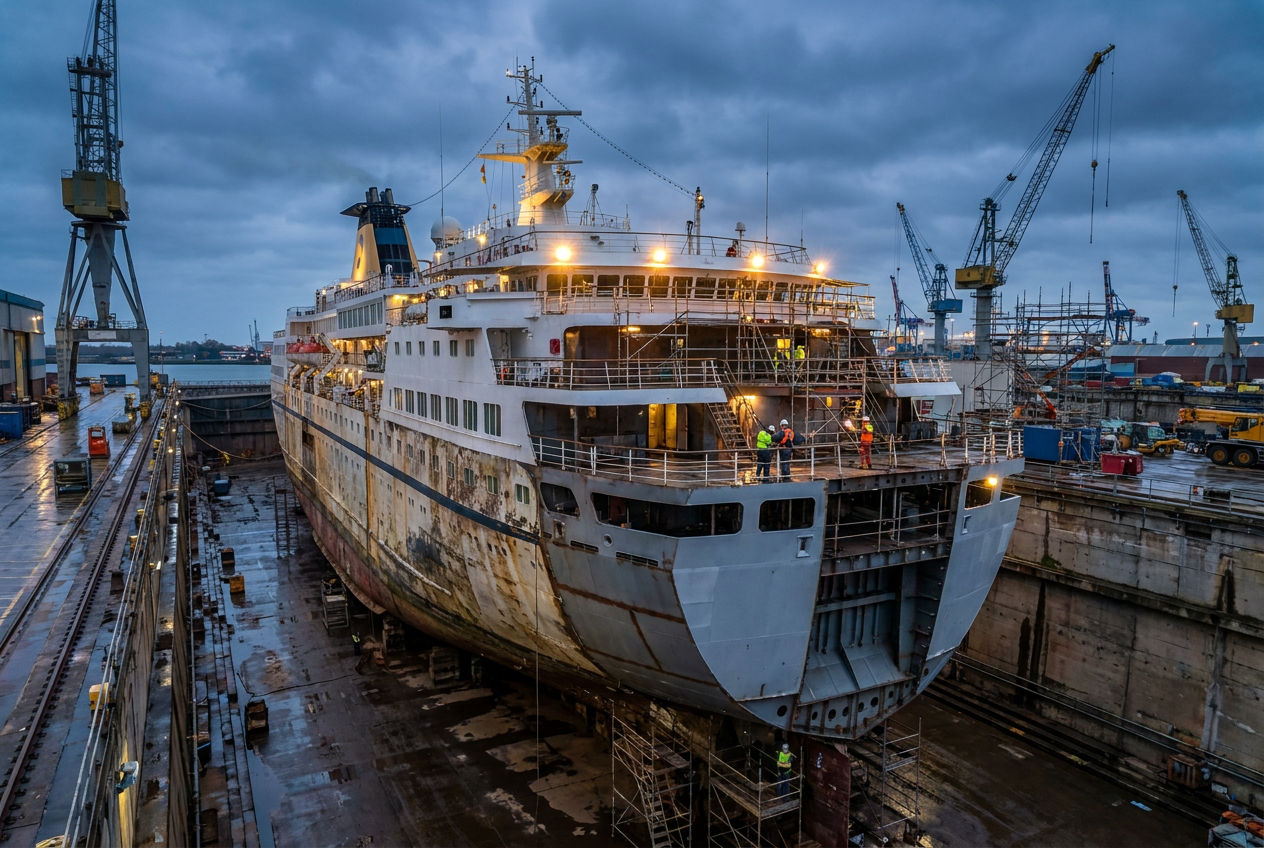
Carnival Freedom, a 110,000-gross-ton cruise ship delivered in 2007, completed a 35-day yard period in Marseille during September and October 2026. The ship received a newly designed funnel with reduced height, and Carnival said the change was intended to permit access to more ports. The vessel had previously suffered two separate funnel-related fire incidents, one in 2022 and another in 2024, after which the upper winged elements were removed. The ship is currently based in Port Canaveral and is due to shift to Norfolk in May 2027.
What it means for owners
For shipowners, the important lesson is that air-draft reduction can be a commercially meaningful retrofit on older cruise ships, especially where bridge clearances constrain itinerary design. A vessel in the 110,000-GT range typically earns value from schedule adaptability: being able to switch between East Coast homeports, seasonal repositionings, and weather-driven contingency calls can preserve pricing power and improve berth utilization. If a structural alteration trims even a modest margin from a ship’s vertical profile, it may unlock terminals or transit windows that were previously marginal or unavailable. In a market where newbuild slots remain costly and long-dated, that kind of flexibility can be cheaper than ordering replacement tonnage or accepting narrower deployment choices.
The EPC and repair implication is equally significant. This was not a cosmetic drydock item; it involved changing a highly visible topside structure while preserving exhaust performance, vessel stability parameters, class compliance, and brand recognizability. That requires coordinated naval architecture, structural steel work, outfitting, emissions-flow assessment, and likely updated fire-protection integration. For yards and engineering houses, this is the kind of modernization package that could become more common as operators reassess midlife ships for another decade or more of service. Many fleets built in the 2000s now sit in the decision zone between retirement, transfer, or reinvestment. Retrofit programs that alter operating limits—air draft, shore-power readiness, accessibility, hotel load efficiency, or fuel-system conversion—are increasingly part of asset strategy, not just technical upkeep.
There is also a wider competitive angle. Cruise brands with standardized classes have historically benefited from interchangeable deployment, but infrastructure constraints often break that promise in practice. A class ship that can reach more turnaround ports gains network utility beyond its individual earning profile. That matters when operators want optionality for regional demand swings, hurricane-season scheduling, or redeployment away from weaker source markets. In that context, a shortened funnel is not merely a fix to a recurring problem; it may represent a deliberate move to convert a class-limitation issue into a portfolio advantage.
MaritimeNG — critical view
The main risk is that the industry may overread the immediate benefit while underestimating the engineering trade-offs. Funnel geometry on passenger ships is tied to smoke dispersion, heat management, vibration, maintenance access, and deck experience. Any reduction in height must still prevent exhaust nuisance over upper public spaces and avoid creating secondary operational penalties. If the revised structure widens instead of rises, there may also be implications for internal routing, weight distribution aloft, and lifecycle maintenance complexity. Those issues are manageable, but only with disciplined design validation rather than a rushed steel solution.
A second overlooked point is that infrastructure bottlenecks are not static. Bridge clearances, channel restrictions, terminal equipment, and environmental rules combine to determine true port accessibility. Lowering one ship’s air draft may improve eligibility for selected ports, but it does not solve berth length limits, gangway interface issues, local emissions expectations, or passenger-processing constraints. The strongest owners will therefore treat this type of project as one element in a broader deployment model, supported by route economics and technical due diligence. That is where integrated retrofit planning—something MaritimeNG tracks closely across repair and modernization activity—becomes more valuable than isolated drydock decisions.
Verdict
This refit points to a pragmatic future for older cruise ships: selective structural modernization can extend earnings life by expanding where a vessel can trade. Expect more owners to test similar capex where modest engineering changes can produce outsized network flexibility.
Fundamental basis
The economic mechanics behind the facts above, grounded in Martin Stopford’s Maritime Economics. Reference only — not investment advice.
Facing a similar situation on your vessel? Model the numbers before you commit.
Open the off-hire & deviation calculatorsSource Attribution
This analytical review is based on publicly available facts originally reported by The Maritime Executive. MaritimeNG does not claim authorship of the underlying facts. Read the original publication
© 2026 MaritimeNG — Independent analytical commentary. All analysis, opinions, and forward-looking assessments are original work by MaritimeNG Editorial and may differ from those of the parties mentioned or the cited source. Factual data is restated in our own words based on publicly available information. All trademarks and trade names belong to their respective owners. This content does not constitute legal, technical, or investment advice.