Lloyd’s Register Targets Feeder Fleet Renewal With Integrated Retrofit Support
Lloyd’s Register has introduced a feeder-vessel campaign that bundles classification, advisory and digital capabilities to help owners assess renewal, retrofit and life-extension pathways. The initiative reflects rising pressure on small container operators to balance compliance costs, fuel-transition uncertainty and tight operating economics.
What happened
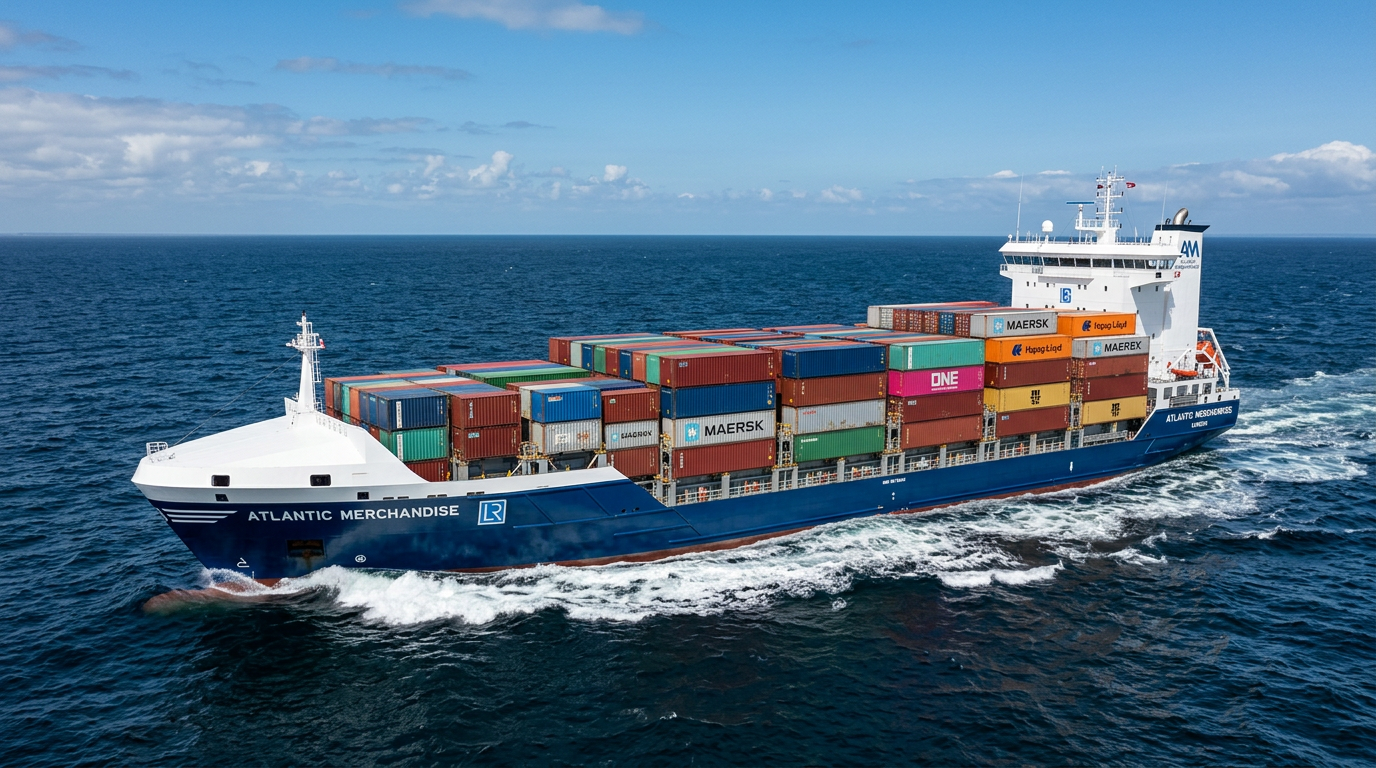
Lloyd’s Register has rolled out a program focused on the feeder container segment, offering shipowners a combined package of technical classification support, consulting input and digital planning tools. The proposition is aimed at operators considering fleet replacement decisions as well as those pursuing upgrade and service-life extension strategies for existing ships. The effort is framed around the operating realities of feeder trades, including short voyages, repeated port rotations and narrow commercial margins. LR says its support covers energy-efficiency improvements, emissions-related compliance work and preparation for future fuel changes, with digital functionality delivered through its OneOcean platform. According to LR’s Nick Gross, owners are dealing with increasingly complicated choices on capital allocation and regulatory obligations.
What it means for owners
The strategic significance of this initiative lies in the fact that feeder shipping is becoming one of the hardest container segments in which to make clean, linear investment decisions. Smaller vessels on short-sea and regional loops often face operating profiles that are poorly suited to simplistic decarbonization templates. Frequent port calls increase hotel loads, maneuvering intensity and auxiliary engine use, while short routes can make fuel-switching economics very different from those of deepsea tonnage. In that context, an integrated offering that combines class, advisory and digital performance management is commercially logical. Owners are not just asking whether to retrofit; they are asking whether a vessel can remain competitive under Carbon Intensity Indicator pressure, whether a technical upgrade meaningfully improves charter attractiveness, and whether the ship can navigate a regulatory environment now shaped by both IMO and EU rules. CII remains an especially awkward issue for older feeder ships because modest speed reductions can conflict with schedule integrity on fixed liner loops, while technical modifications may yield only incremental rating improvements unless combined with operational changes.
The EU layer intensifies the decision matrix. EU ETS adds a direct carbon cost to voyages touching Europe, while FuelEU Maritime will increasingly penalize ships with higher greenhouse-gas intensity unless operators lower lifecycle emissions or pay for compliance flexibility. For feeder vessels with thin margins and high utilization expectations, these are not abstract policy concerns; they directly affect slot economics and network design. Off-hire economics become central here. A theoretically attractive retrofit can be value-destructive if drydock time removes a ship from service during strong regional demand or if yard queues delay redelivery beyond schedule windows. Yard capacity is therefore not a side issue but a binding constraint, especially if many owners converge on similar retrofit cycles for efficiency devices, alternative-fuel readiness, shore-power integration or engine modifications. In practice, the owner’s challenge is to sequence compliance, maintenance and commercial deployment in a way that preserves earnings while reducing regulatory exposure.
This is where class requirements and digital tools can either create value or become mere packaging. Any life-extension strategy for an older feeder ship must align with class survey timing, structural condition, machinery reliability and the technical implications of adding new systems. Retrofit decisions increasingly need to be made against special survey windows, steel renewal expectations and the risk that additional capex goes into an asset with shrinking residual value. OneOcean-style digital support can help if it improves route-level emissions visibility, port-call planning and compliance forecasting across ETS and FuelEU, but owners will still need asset-specific answers: which vessels justify capex, which should trade out their remaining life with minimal upgrades, and which should be replaced despite elevated newbuild prices. The campaign therefore signals a broader market reality: feeder decarbonization is no longer only about technology selection, but about synchronized regulatory, technical and commercial triage.
MaritimeNG — critical view
While LR’s positioning is timely, owners should be careful not to mistake integrated service offerings for neutral strategic solutions. A class society can provide substantial technical rigor and valuable compliance guidance, but the core question for many feeder operators is not whether a retrofit is technically feasible; it is whether the investment survives realistic assumptions on carbon pricing, charter recovery, residual asset value and service disruption. In a market where ship ages, trade patterns and earnings profiles vary widely, bundled support may simplify the process without necessarily reducing the risk of overcapitalizing older ships.
There is also a wider industry issue that no campaign can fully solve: regulation is moving faster than asset cycles. Fuel pathways remain uncertain, port infrastructure is uneven, and yard availability can derail even well-designed upgrade plans. Some feeder owners may conclude that limited compliance work plus disciplined operational management is superior to major retrofit spending, especially on vessels nearing the point where class renewal and machinery replacement become expensive. Others may prefer secondhand replacement over bespoke retrofits. The key test for LR’s initiative will be whether it helps owners reject uneconomic projects as confidently as it supports the viable ones.
Verdict
LR’s campaign is a credible response to the feeder sector’s fragmented decarbonization challenge, especially where compliance, drydock timing and vessel-specific economics intersect. Its real value will depend on disciplined investment filtering rather than retrofit enthusiasm alone—a practical lens that also resonates across emerging maritime markets such as MaritimeNG.
Fundamental basis
The economic mechanics behind the facts above, grounded in Martin Stopford’s Maritime Economics. Reference only — not investment advice.
Facing a similar situation on your vessel? Model the numbers before you commit.
Open the off-hire & deviation calculatorsSource Attribution
This analytical review is based on publicly available facts originally reported by Ship & Offshore. MaritimeNG does not claim authorship of the underlying facts. Read the original publication
© 2026 MaritimeNG — Independent analytical commentary. All analysis, opinions, and forward-looking assessments are original work by MaritimeNG Editorial and may differ from those of the parties mentioned or the cited source. Factual data is restated in our own words based on publicly available information. All trademarks and trade names belong to their respective owners. This content does not constitute legal, technical, or investment advice.