HD Hyundai’s U.S. Yard Move Could Reprice American Shipbuilding
Reported talks between HD Hyundai and a U.S. shipyard point to more than a simple ownership transaction. If completed, the move would deepen foreign-backed industrial participation in the U.S. market and could alter how repair, modernization, and newbuild work is competed and delivered.
What happened
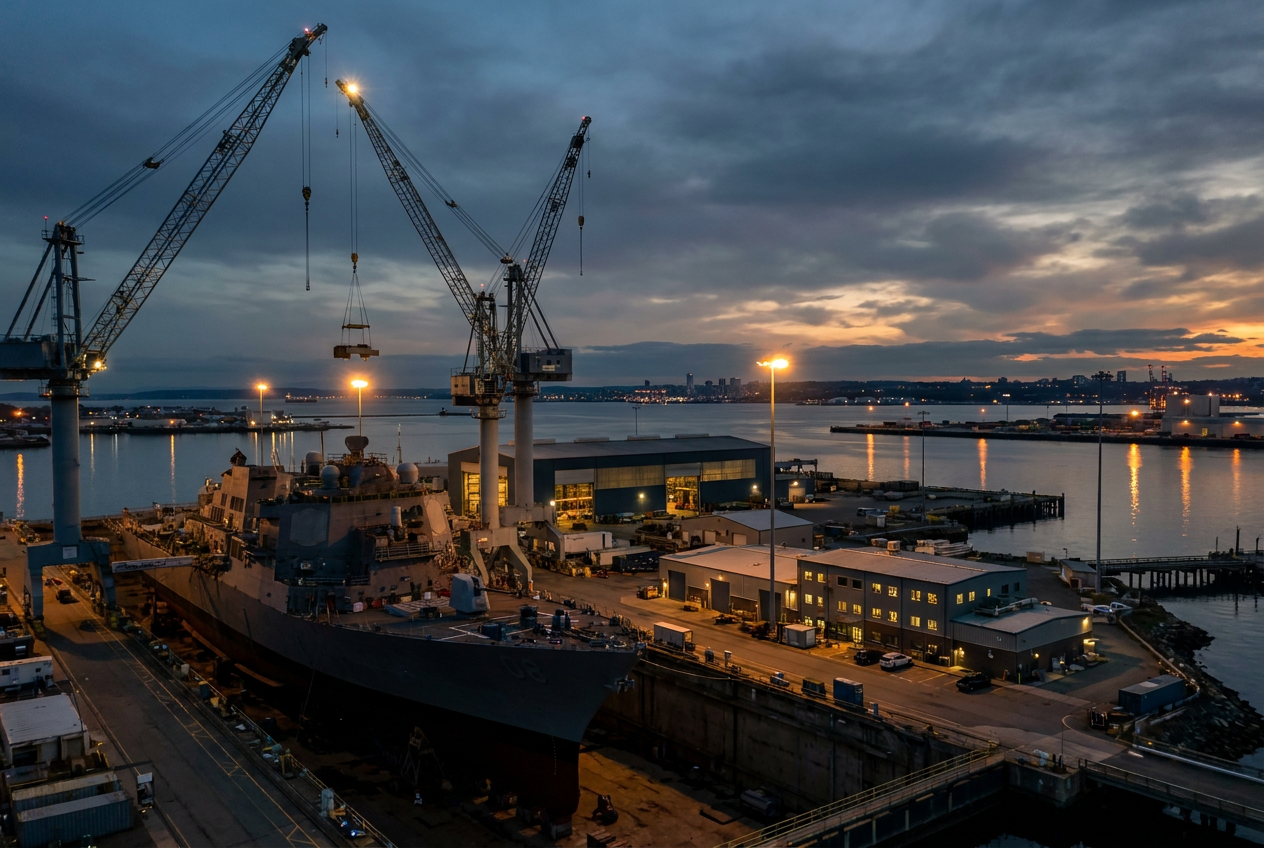
Industry reports indicate HD Hyundai is in serious discussions to buy into or acquire a U.S. shipyard, with locations near the Pacific naval concentration in Southern California or on the Texas Gulf Coast said to be among the options under review. The reported effort follows a wider U.S.-focused strategy that already includes partnerships with major American industrial players, a recently formed U.S. subsidiary, and financial backing linked to both Korean and U.S. capital. The timing matters because Washington’s shipbuilding agenda now appears more open to structured foreign participation, provided it delivers domestic employment, stronger local industrial capability, and transfer of know-how. The reported negotiations also come as U.S. yard valuations rise amid expectations of larger naval and Coast Guard programs and as Korean competitors race to secure U.S. physical capacity.
What it means for owners
For shipowners and operators, the core issue is not the headline of a foreign group entering the U.S. yard market; it is whether that entry converts into usable capacity, shorter lead times, and better execution discipline. U.S. shipbuilding and repair have long faced a structural mismatch between demand ambitions and yard throughput. A well-capitalized entrant with established production systems, procurement discipline, and digital yard practices could help narrow that gap, especially in segments where American owners need predictable schedules more than bespoke complexity. If HD Hyundai secures a platform in the United States, the immediate effect may be less about headline vessel output and more about process modernization: planning systems, modular construction methods, supplier integration, and workforce training. Those changes matter directly to operators because they influence docking windows, retrofit duration, cost certainty, and lifecycle support quality.
The competitive implications are equally significant. A Hyundai-controlled or Hyundai-backed yard would add pressure on incumbent U.S. facilities to improve productivity rather than rely on scarcity pricing. That could be healthy for commercial operators, but it may also intensify competition for labor, specialist subcontractors, and long-lead equipment. In practical terms, owners may see a mixed market: stronger technical offerings and possibly better project management on one hand, but continued cost inflation in the near term as yards expand and chase the same workforce pool. For EPC-related activity, this is where the story becomes especially consequential. New ownership often triggers capex into cranes, panel lines, automation, digital engineering tools, and waterfront upgrades. It also tends to generate follow-on demand in modernization packages, energy-transition retrofits, and defense-adjacent conversion work. That creates opportunity, but only for operators that align early with yards whose capability roadmaps match their fleet plans.
There is also a strategic supply-chain angle. Korean shipbuilders bring mature vendor ecosystems and program-management experience built at scale, but U.S. operating conditions are different: Jones Act constraints, defense compliance, union dynamics, permitting timelines, and domestic-content expectations can all blunt imported efficiency. Shipowners should therefore avoid assuming that a transaction alone will solve capacity shortages. The more realistic expectation is a gradual uplift in yard competence, first in project controls and selected vessel classes, then later in broader construction output if labor pipelines and supplier localization keep pace. In other words, this would be an industrial reset, not an instant remedy.
MaritimeNG — critical view
MaritimeNG’s view is that the reported negotiations reflect a deeper shift in U.S. maritime policy: Washington appears increasingly willing to trade ideological purity on domestic production for practical gains in capability, speed, and technology absorption. That is a notable development. The real test will be whether policymakers can balance foreign industrial participation with credible domestic capacity-building rather than simply allowing overseas groups to arbitrage a politically protected market. If the framework is disciplined, the U.S. could gain more resilient yard infrastructure. If it is poorly structured, owners may end up with expensive assets that remain constrained by the same execution bottlenecks under a different name.
A second point deserves attention: rising yard valuations can become a strategic problem. When acquisition prices climb on the expectation of future government-backed demand, the buyer inherits pressure to justify that premium. That can delay investment payback, elevate bid pricing, or skew yard focus toward programs with political visibility rather than commercially useful throughput. For operators, the key question is not who owns the gate, but whether the yard becomes measurably better at delivering repair, retrofit, and construction work on time. The market should judge this trend by operational outcomes, not by announcement value.
Verdict
If HD Hyundai enters the U.S. yard market, it would signal that American shipbuilding is moving toward a partnership-led rebuild rather than a purely domestic revival. For owners and operators, the opportunity is real, but the winners will be those who track where capability upgrades actually materialize and position their projects accordingly—an area MaritimeNG will continue to watch closely.
Fundamental basis
The economic mechanics behind the facts above, grounded in Martin Stopford’s Maritime Economics. Reference only — not investment advice.
Facing a similar situation on your vessel? Model the numbers before you commit.
Open the off-hire & deviation calculatorsSource Attribution
This analytical review is based on publicly available facts originally reported by The Maritime Executive. MaritimeNG does not claim authorship of the underlying facts. Read the original publication
© 2026 MaritimeNG — Independent analytical commentary. All analysis, opinions, and forward-looking assessments are original work by MaritimeNG Editorial and may differ from those of the parties mentioned or the cited source. Factual data is restated in our own words based on publicly available information. All trademarks and trade names belong to their respective owners. This content does not constitute legal, technical, or investment advice.