Cruise drydocks shift toward integrated repair and conversion packages
European yards are seeing cruise owners bundle mandatory technical work with cabin, hotel and revenue-focused upgrades in the same docking period. That shift is reshaping yard selection, project planning and the economics of maintaining older but commercially viable tonnage.
What happened
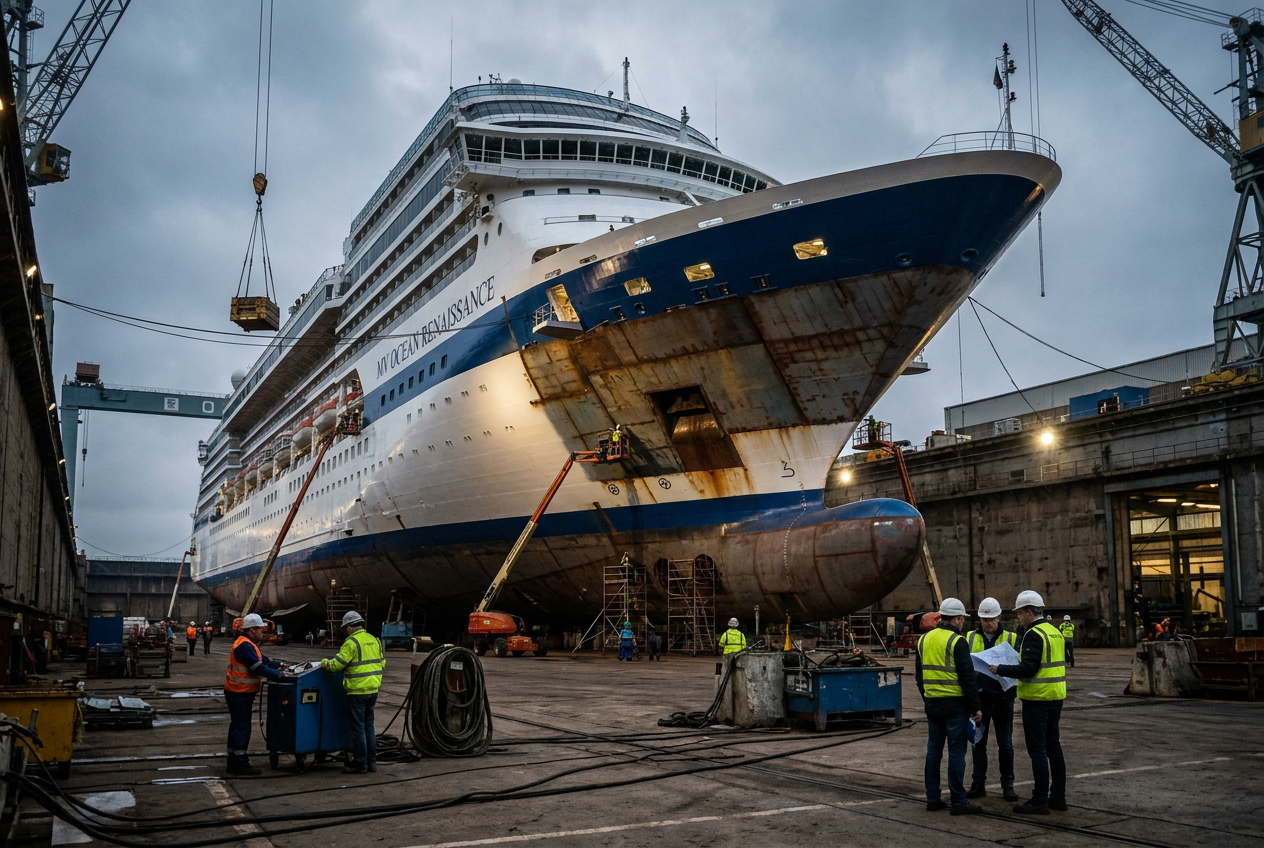
In 2026, major European repair yards are handling more cruise projects that mix statutory maintenance with substantial refurbishment and conversion scopes. Fincantieri is concentrating its cruise repair and modification activity at Palermo, while Trieste has moved more toward superyacht and lighter offshore assignments, and Poland’s Remontowa remains active in retrofit work for regional cruise operators. Recent work on Silversea’s Silver Spirit illustrates the pattern: structural changes, accommodation adjustments, interior renewal and technical system updates were carried out together rather than as separate projects.
What it means for owners
For cruise owners, the key market signal is not simply that repair yards are busy, but that the content of a drydock is changing. A class or regulatory stop is no longer treated as an isolated compliance event if the vessel also needs product repositioning, hotel upgrades or layout changes to sustain yields. Operators increasingly want one yard period to absorb steel renewal, machinery and safety work, accommodation modifications, public area refreshes and systems adaptations in a single execution plan. On paper, this is rational: one off-hire period, one project management structure, one procurement campaign and one class interface. In practice, it creates a far more demanding docking model. Cruise vessels are among the most schedule-sensitive assets in shipping because lost voyage days directly affect ticket revenue, onboard spend and itinerary commitments. That means every added work item inside the docking window raises schedule risk, especially where structural alterations trigger knock-on effects in HVAC, electrical load balance, lifesaving calculations, hotel operations and certification sequencing.
The commercial logic nevertheless remains strong. Many cruise assets built in the 2000s and early 2010s still have substantial service life left, but they need periodic reinvestment to remain competitive against newer ships with higher cabin density, better premium space allocation and more modern guest expectations. A drydock that only restores technical compliance may preserve operability, yet it does little to improve earnings. By contrast, adding cabins, reworking suite categories, improving public spaces or modernising interior product can lift revenue per berth and extend market relevance. This is why shipowners are increasingly willing to pursue more complex scopes during class windows: the incremental capex can be justified if the vessel emerges with stronger pricing power or a clearer brand position. The Silver Spirit example is useful because it shows how repeat interventions on the same ship can form part of long-cycle asset management rather than one-off repair thinking.
The yard side of the equation matters just as much. Not every repair facility can absorb cruise conversion work that combines naval architecture, structural fabrication, hotel outfitting, safety compliance, procurement and tight commissioning deadlines. Owners therefore face a narrowing pool of credible yards, particularly in Europe, where cruise operators often prefer proximity, established class relationships and experienced subcontractor ecosystems. Concentration of capability can support quality, but it also strengthens yard pricing power and tightens slot availability. For operators, that means drydock planning has to move earlier and become more data-led. Fleet technical teams, hotel operations, commercial planners and finance departments need to align well in advance on what work is essential, what work is revenue-accretive and what work can be deferred. The old separation between technical docking and product enhancement is fading; lifecycle management now depends on integrating both without allowing complexity to erode the value case.
MaritimeNG — critical view
There are limits to the integrated-drydock strategy. Combining mandatory and discretionary work can produce efficiency, but it can also turn a manageable maintenance event into a high-risk capital project. Scope growth is the principal danger: once a ship is opened up for structural or interior changes, hidden condition findings, design revisions and late owner requests can rapidly consume contingency. Cruise ships are especially vulnerable because hotel systems are deeply interconnected; a seemingly straightforward accommodation change can trigger ventilation, fire zoning, escape route, weight distribution and certification consequences. If the schedule slips, the cost of missed sailings can overwhelm the savings achieved by combining scopes.
Operators should also be careful not to overestimate the earnings upside of conversion. Additional cabins or upgraded spaces only create value if they fit the brand, itinerary mix and target customer. A technically successful conversion can still disappoint commercially if it reduces space quality, creates service bottlenecks or misreads demand trends. There is also a portfolio question: some aging ships justify major reinvestment, while others may be better managed through lighter refurbishment, charter repositioning or earlier exit. In a constrained yard market, disciplined asset selection may matter more than ambition.
Verdict
The cruise repair market in Europe is moving toward fewer, more complex dockings that combine compliance, refurbishment and commercial repositioning. For operators, the opportunity is clear, but so is the execution risk: value will come from early scope discipline, realistic scheduling and choosing yards with proven integration capability—precisely the kind of market shift MaritimeNG will continue tracking closely.
Fundamental basis
The economic mechanics behind the facts above, grounded in Martin Stopford’s Maritime Economics. Reference only — not investment advice.
Facing a similar situation on your vessel? Model the numbers before you commit.
Open the off-hire & deviation calculatorsSource Attribution
This analytical review is based on publicly available facts originally reported by Drydock Magazine. MaritimeNG does not claim authorship of the underlying facts. Read the original publication
© 2026 MaritimeNG — Independent analytical commentary. All analysis, opinions, and forward-looking assessments are original work by MaritimeNG Editorial and may differ from those of the parties mentioned or the cited source. Factual data is restated in our own words based on publicly available information. All trademarks and trade names belong to their respective owners. This content does not constitute legal, technical, or investment advice.