Brazil's Shipbuilding & Ship-Repair Industry in 2026: A Petrobras-Driven Recovery, and How to Enter It
Brazil's naval sector is booming again on the back of Petrobras's FPSO and platform programme. We map the leading yards, the BNDES/FMM/Repetro financing architecture, the local-content rules — and the labour, guarantee and logistics risks international players must price in.
What happened
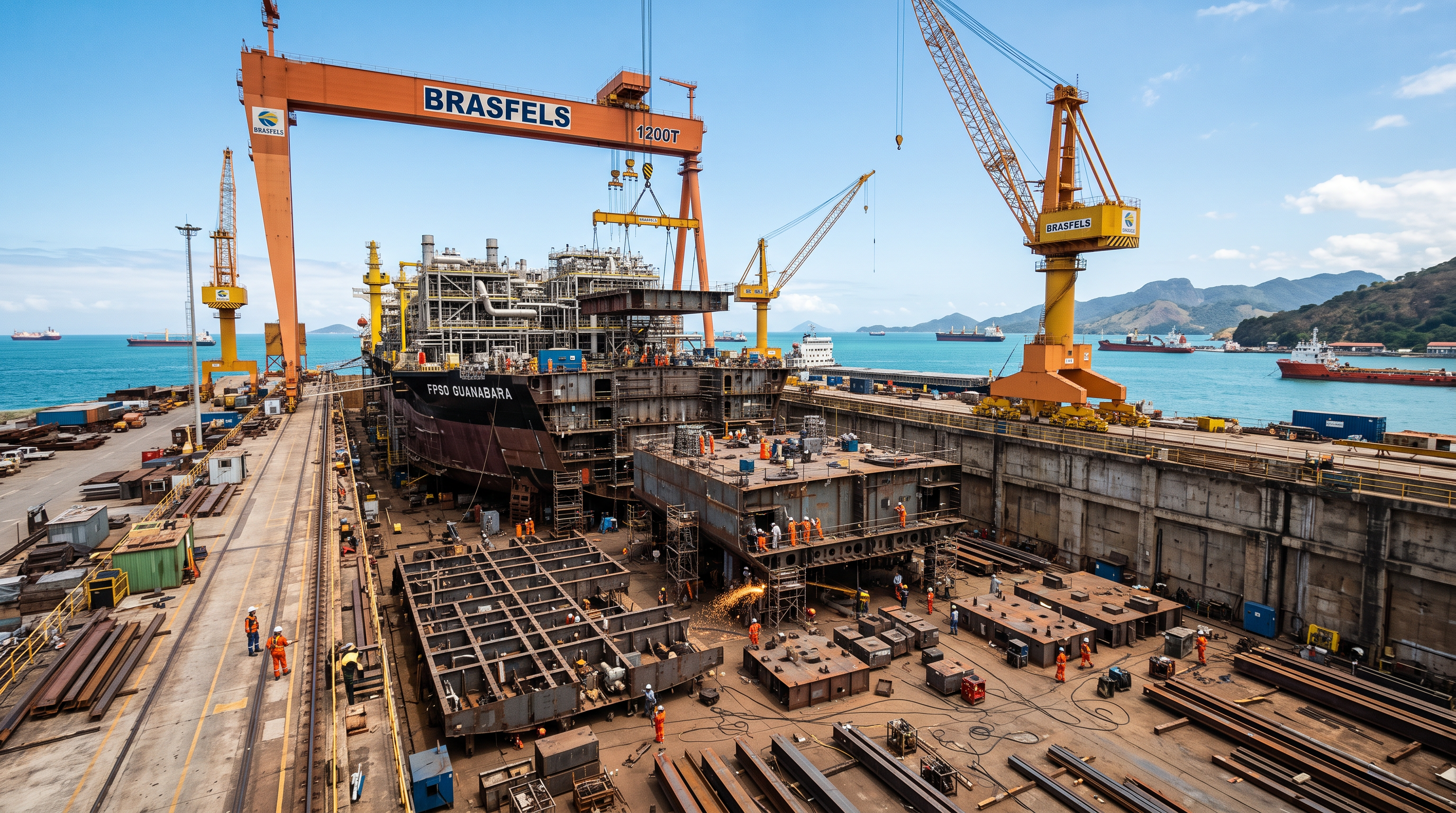
Brazil's shipbuilding and ship-repair industry is in a broad recovery cycle in 2024–2026, driven almost entirely by the offshore oil & gas sector. The demand engine is Petrobras, whose 2024–2028 strategic plan commits to a large new-build programme of FPSO units and platforms (the P-78, P-79, P-80, P-82 and P-83 projects among others) together with a renewal of the support-vessel fleet.
The industry is coordinated through a cluster of institutions: SINAVAL (the national shipbuilders' union), IBP (the oil & gas institute, which jointly with Petrobras launched a public "Map of Brazilian Shipyards"), and EMGEPRON, the Navy-linked project-management company that anchors naval programmes and preserves industrial competencies.
The leading offshore-capable yards include Seatrium's Brazilian operations — BrasFELS (Angra dos Reis), Jurong Aracruz (EJA) and Seatrium Singmarine Brasil — alongside Itaguaí Construções Navais (ICN), Estaleiro Atlântico Sul, Enseada, Mauá and VARD Promar (Fincantieri). A second tier of regionally specialised yards — Wilson Sons, Detroit Brasil, INC Indústria Naval Catarinense, Rio Maguari, Camorim and Beconal — covers tugs, PSV/AHTS, barges and inland-waterway tonnage.
Financing has historically flowed through BNDES and the Fundo da Marinha Mercante (FMM), while the Repetro special customs regime reduces the tax burden on imported oil & gas equipment. Vessels and structures are certified to IACS classification societies — DNV, Lloyd's Register, ABS, Bureau Veritas, ClassNK and RINA — with the Brazilian society RBNA and Navy standards (NORMAM/DPC) applied domestically.
What it means for owners
The structural story is straightforward: a very large, government-backed demand pipeline meeting a supply base that is still rebuilding after the 2015–2020 downturn. Petrobras's multi-year FPSO and platform programme, combined with ANP local-content obligations, guarantees a floor of work that must — at least in part — be executed inside Brazil. That is why yards running at 30–40% utilisation in 2022 are now booking integration and module work into 2028–2029.
The most defensible niches for Brazilian yards are module fabrication, FPSO integration/conversion, and repair/retrofit — segments where proximity to the operating fields and local-content credit matter more than raw hull-construction price. Full hull construction of complete FPSOs remains exposed to Asian competition: the P-78/P-79 tenders famously attracted only Asian yards for the hull scope, a clear signal of where Brazil is and is not cost-competitive.
For international equipment suppliers, EPC contractors and classification specialists, the practical implication is that Brazil is now a market you engage through partnership and local presence, not through arm's-length export. The integrators that dominate the FPSO chain — MODEC, SBM Offshore, TechnipFMC — subcontract module and integration scope to Brazilian yards, and that subcontracting layer is where most addressable opportunity sits.
MaritimeNG — critical view
MaritimeNG's candid read is that the demand is real but the execution risk is systematically under-priced by newcomers. Three constraints deserve emphasis.
Labour: the skilled workforce — welders, pipe-fitters, commissioning engineers — did not survive the last downturn intact. Wage inflation in the Rio–Niterói corridor is running double-digits, and rapid re-scaling of headcount is itself a schedule risk on large programmes.
Financing and guarantees: BNDES/FMM credit and Repetro relief are real advantages, but the sector's chronic weakness is bank and surety guarantees for large contracts. SINAVAL itself has repeatedly flagged the need for dedicated guarantee funds. A yard's balance sheet — not its dock — is often the binding constraint on winning work. The presence of a yard in "recuperação judicial" (judicial recovery) among historically prominent names is a reminder that this is a cyclical, capital-intensive business.
Local content: politically durable, but it adds a 20–30% cost premium and 6–12 months of schedule versus Asian benchmarks. For mid-size OEMs, "compliance" in practice means establishing in-country assembly or warehousing — a real barrier, not a formality.
The honest conclusion: Brazil rewards participants who treat it as a long-horizon, relationship-driven market with local footprint, and punishes those who model it as a spot export destination.
Verdict
Brazil is once again one of the most important offshore-driven shipbuilding and repair markets in the world — but it is a market to be entered deliberately. The winners will be equipment suppliers and service providers who localise, partner with the established integrators and yards, and price in the labour, guarantee and logistics realities.
MaritimeNG tracks the Brazilian yard landscape, tender pipeline and supply chain through our Brazil & Argentina regional hub. Owners weighing a Brazilian drydocking or repair stop can use our Off-Hire & Deviation calculators to compare it against Caribbean, West African and Southeast Asian alternatives, and our SOS-Finder now lists vetted Brazilian yards and suppliers for emergency and planned repair support.
Fundamental basis
The economic mechanics behind the facts above, grounded in Martin Stopford’s Maritime Economics. Reference only — not investment advice.
Facing a similar situation on your vessel? Model the numbers before you commit.
Open the off-hire & deviation calculatorsSource Attribution
This analytical review is based on publicly available facts originally reported by IBP / SINAVAL / Seatrium / Petrobras (public sources). MaritimeNG does not claim authorship of the underlying facts. Read the original publication
© 2026 MaritimeNG — Independent analytical commentary. All analysis, opinions, and forward-looking assessments are original work by MaritimeNG Editorial and may differ from those of the parties mentioned or the cited source. Factual data is restated in our own words based on publicly available information. All trademarks and trade names belong to their respective owners. This content does not constitute legal, technical, or investment advice.