Inside Brazil's Marine Equipment Supply Chain: Local Content Meets IACS Certification
From WEG generators and Schottel thrusters to KSB pumps and De Nora ballast-water systems, Brazil's equipment manufacturers let projects satisfy local-content rules while keeping international class approvals. We assess where real capability sits — and where buyers should do line-by-line diligence.
What happened
Brazil hosts a maturing domestic supply chain of marine and offshore equipment manufacturers, many operating under licence from, or in partnership with, established international OEMs and certified to IACS classification standards (DNV, ABS, Bureau Veritas, Lloyd's Register, ClassNK, RINA).
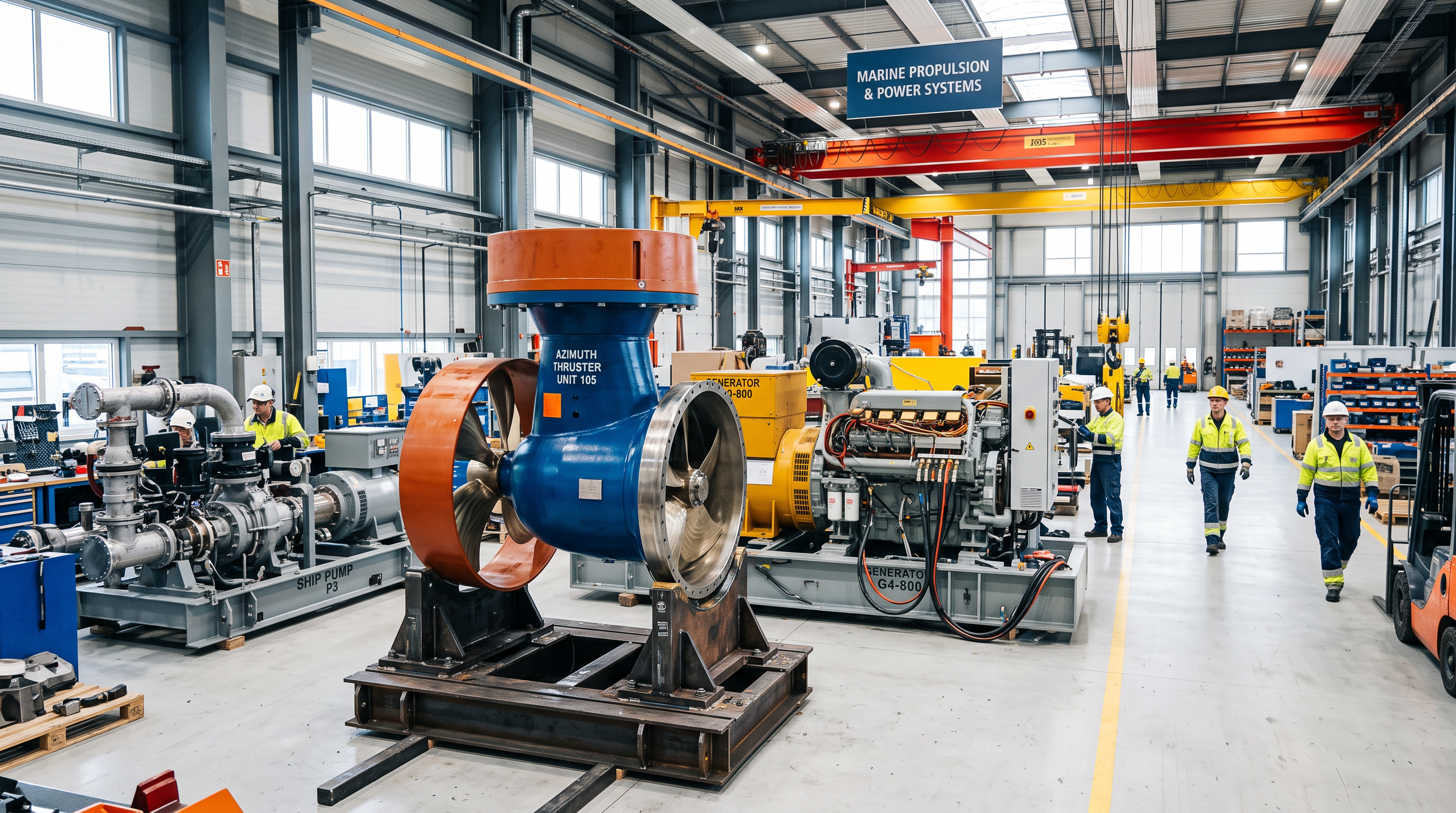
In electrical power and automation, WEG (Jaraguá do Sul) manufactures marine motors and generators up to roughly 50 MW, transformers, variable-frequency drives and power-management systems, and — as a Nippon Paint Marine licensee — marine protective coatings. In propulsion, Schottel do Brasil (Itajaí) supplies azimuth thrusters, PumpJet and tunnel thrusters including the SYDRIVE-M hybrid line. In engines, MWM (part of the Tupy group) builds diesel engines and gensets on MAN-licensed platforms and works with OXE Marine on diesel outboards, with decarbonisation programmes covering hydrogen (HPDI) and biomethane.
Rotating equipment and deck machinery are covered by KSB Brazil (centrifugal pumps for ballast, firefighting and cooling), OMEL (centrifugal, vacuum and dosing pumps; Petrobras Class A supplier), Schulz (marine air compressors), Strauhs (winches, steering gear and heave-compensated cranes) and Nor Crane & Winch (offshore cranes and winches up to 300 t). Structural steel for hulls and offshore fabrication is supplied by ArcelorMittal Brazil, and ballast-water treatment by the De Nora (BALPURE) and DESMI (CompactClean) lines.
Exports and capacity investment are frequently supported by BNDES and its Exim financing lines, and imports of oil & gas equipment benefit from the Repetro customs regime.
What it means for owners
The significance of this supplier base is that it lets international projects satisfy ANP local-content requirements without sacrificing IACS certification. A WEG marine generator, a Schottel thruster assembled locally, or a KSB pump built under German licence all count toward local content while carrying the same class approvals an owner would expect from the parent OEM. That combination — local-content credit plus international certification — is precisely what the Petrobras-driven programme needs, and it is the single most useful thing for a foreign integrator to understand about the Brazilian chain.
The licensing model also explains where genuine capability sits. In electrical machines and coatings (WEG), pumps (KSB, OMEL), compressors (Schulz) and deck machinery (Strauhs), Brazil has real, exportable manufacturing depth. In high-end propulsion and large-bore engines, the value delivered locally is assembly, integration, commissioning and after-sales — with core technology still originating from the international licensor. For procurement teams, that distinction determines lead times, spares strategy and where technical risk actually lives.
Decarbonisation is the emerging thread: WEG's electrical/PMS portfolio, MWM's hydrogen and biomethane engine work, and the De Nora/DESMI ballast-water lines position the local chain to support eco-retrofit and green-newbuild scope, not just conventional equipment supply.
MaritimeNG — critical view
MaritimeNG's view is that the Brazilian supplier base is a real asset but should not be over-read. Two cautions matter.
First, "made in Brazil" spans a wide spectrum from genuine local manufacturing to licence assembly of imported kits. Buyers should verify, per line item, what is actually fabricated locally versus imported and assembled — because that drives both local-content qualification and realistic lead times. Treating the whole chain as uniformly "domestic" leads to schedule surprises.
Second, spares and service coverage outside the São Paulo–Santa Catarina industrial belt and the Rio offshore hub can be thin. For a vessel needing emergency support in the north or on the Amazon, the nearest certified service capability may be a significant mobilisation away — a factor owners must build into repair planning rather than assume away.
On certification, the practical guidance is simple: insist on current IACS type approvals and class certificates for the specific model and build location, and confirm that the local entity — not just the parent OEM — is authorised to certify, commission and warrant the equipment.
Verdict
Brazil's marine equipment chain is deep enough to make credible local-content compliance compatible with international IACS certification — an unusual and valuable combination for FPSO and support-vessel programmes. The right approach is line-by-line diligence: confirm local fabrication scope, class approvals and in-country service coverage before committing.
MaritimeNG's SOS-Finder now catalogues vetted Brazilian equipment manufacturers and suppliers — WEG, Schottel do Brasil, KSB, OMEL, Schulz, Strauhs, Nor Crane, ArcelorMittal and the De Nora/DESMI ballast-water lines among them — alongside the country's shipyards, so owners and managers can identify certified local support for both planned projects and emergency response. Explore the Brazil & Argentina regional hub for the full picture.
Fundamental basis
The economic mechanics behind the facts above, grounded in Martin Stopford’s Maritime Economics. Reference only — not investment advice.
Facing a similar situation on your vessel? Model the numbers before you commit.
Open the off-hire & deviation calculatorsSource Attribution
This analytical review is based on publicly available facts originally reported by Manufacturer disclosures / SINAVAL (public sources). MaritimeNG does not claim authorship of the underlying facts. Read the original publication
© 2026 MaritimeNG — Independent analytical commentary. All analysis, opinions, and forward-looking assessments are original work by MaritimeNG Editorial and may differ from those of the parties mentioned or the cited source. Factual data is restated in our own words based on publicly available information. All trademarks and trade names belong to their respective owners. This content does not constitute legal, technical, or investment advice.