Balaena-APCL Deal Reshapes UK Repair Capacity and Slot Competition
Balaena’s purchase of APCL brings several major UK yards under one ownership structure, creating a repair and fabrication network with wider geographic reach and greater scale. For shipowners and technical managers, the significance lies less in deal size than in what it may do to docking access, turnaround flexibility, and the balance between defence and commercial work.
What happened
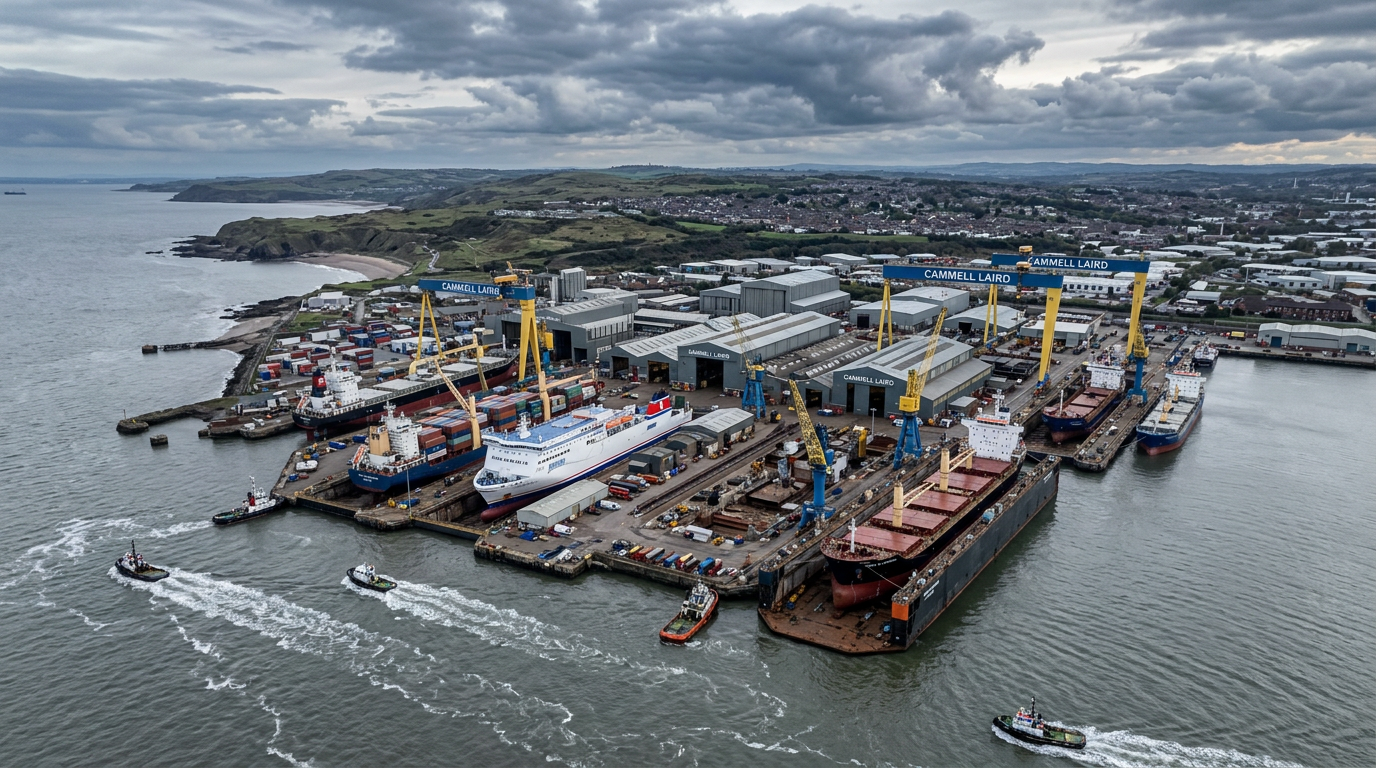
Balaena has taken control of APCL Group, adding A&P Tyne, Cammell Laird, A&P Falmouth, and Falmouth Docks and Engineering Company to a portfolio that already includes Gibdock in Gibraltar and a yard in Cornwall. The enlarged group will operate 12 dry docks across the UK and Mediterranean with a workforce exceeding 2,000, serving offshore, cargo, cruise, and ferry markets while planning upgrades in repair capability, fabrication, and lower-emission propulsion work alongside a new skills pipeline.
What it means for owners
For shipowners, the immediate importance of this transaction is network logic rather than corporate branding. Repair buyers are operating in a market where drydock windows remain tight, labour availability is uneven, and technical scope is becoming more complex as vessels age and retrofit demand rises. A larger multi-yard group can, in theory, ease some of that pressure by pooling planning, engineering resources, procurement, and slot management across locations. If executed well, that gives operators a better chance of matching vessel type, project scope, and trading pattern to the right yard rather than simply taking whatever space is available. For fleets trading Northern Europe, the western UK, and the western Mediterranean, that matters: every unnecessary repositioning day, waiting period, or fragmented subcontracting chain feeds directly into off-hire cost and schedule risk.
The second-order effect is on competition for slots. A 12-drydock network with exposure to defence, offshore energy, ferries, cruise, and merchant tonnage could become a more influential allocator of scarce capacity. That can be positive for owners needing flexible repair pathways, especially where steel renewal, machinery overhaul, and specialist retrofits must be bundled into one project. A unified commercial interface may also reduce the transaction burden on superintendents managing repeat dockings across a fleet. But scale cuts both ways. If commercial owners are dealing with a group that also wants to expand defence and strategic industrial work, the real question is not whether capacity increases in headline terms, but whether merchant vessels gain reliable access during peak periods. UK yards have long faced tension between national industrial policy goals and the practical needs of commercial operators seeking predictable berth dates and cost control. The more successful the group becomes in winning state-backed, defence-linked, or high-value fabrication programmes, the more important internal prioritisation discipline will become.
There is also a broader consolidation angle. European repair markets have been moving toward fewer platforms with broader service portfolios, partly because standalone yards struggle to fund digital systems, heavy-lift infrastructure, emissions-related retrofit capability, and workforce development simultaneously. In that context, Balaena’s move is coherent: decarbonisation projects, electrical integration, propulsion upgrades, and offshore fabrication all favour operators with capital depth and cross-yard engineering coordination. For owners, consolidation can improve technical consistency and provide stronger counterparties for multi-vessel programmes. Yet it can also reduce competitive tension in certain geographies. If fewer independent yards remain available for medium and large projects in the UK market, owners may see less pricing flexibility and harder negotiations on peak-season docking dates. The practical value of this deal will therefore be judged less by strategic language and more by measurable outcomes: berth utilisation, quote responsiveness, project execution quality, labour retention, and whether repair lead times actually improve.
MaritimeNG — critical view
The strategic case is credible, but the industry should be cautious about treating scale alone as a solution to long-standing repair bottlenecks. Acquisitions often promise synergies, customer simplicity, and investment-led modernisation; the harder part is integration. Yard groups with mixed regional identities, legacy systems, and different labour cultures can take years to harmonise in practice. During that period, customers may face the usual transitional frictions: changes in estimating processes, shifting management structures, inconsistent project controls, and uncertainty over where technical authority sits. For owners, that can translate into variation in execution quality even when the group presents a single face to the market.
There is also a tendency in sector narratives to overstate the value of announced capital plans without addressing utilisation economics. Modernising facilities and building green-technology capability are sensible ambitions, but they require sustained throughput, specialist labour, and disciplined project selection. If the group leans too heavily into complex retrofit and defence-adjacent work without protecting routine repair flow, it risks creating a network that looks strategically impressive yet remains difficult for mainstream commercial operators to access at the right time and price. The market should therefore watch not only investment headlines, but also whether ordinary merchant repair work becomes easier to schedule, faster to complete, and less exposed to overruns.
Verdict
This acquisition has the potential to strengthen UK-linked repair and conversion capacity at a time when owners need broader yard options and more dependable delivery. But its real value will be determined in the dock schedule, not the press release; MaritimeNG will be watching slot availability, pricing behaviour, and execution performance closely.
Fundamental basis
The economic mechanics behind the facts above, grounded in Martin Stopford’s Maritime Economics. Reference only — not investment advice.
Facing a similar situation on your vessel? Model the numbers before you commit.
Open the off-hire & deviation calculatorsSource Attribution
This analytical review is based on publicly available facts originally reported by Drydock Magazine. MaritimeNG does not claim authorship of the underlying facts. Read the original publication
© 2026 MaritimeNG — Independent analytical commentary. All analysis, opinions, and forward-looking assessments are original work by MaritimeNG Editorial and may differ from those of the parties mentioned or the cited source. Factual data is restated in our own words based on publicly available information. All trademarks and trade names belong to their respective owners. This content does not constitute legal, technical, or investment advice.